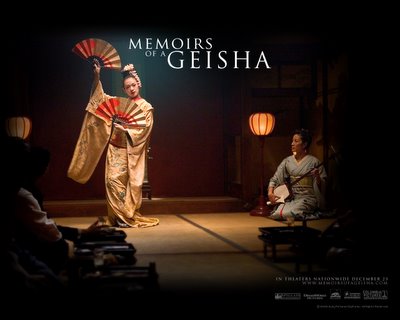
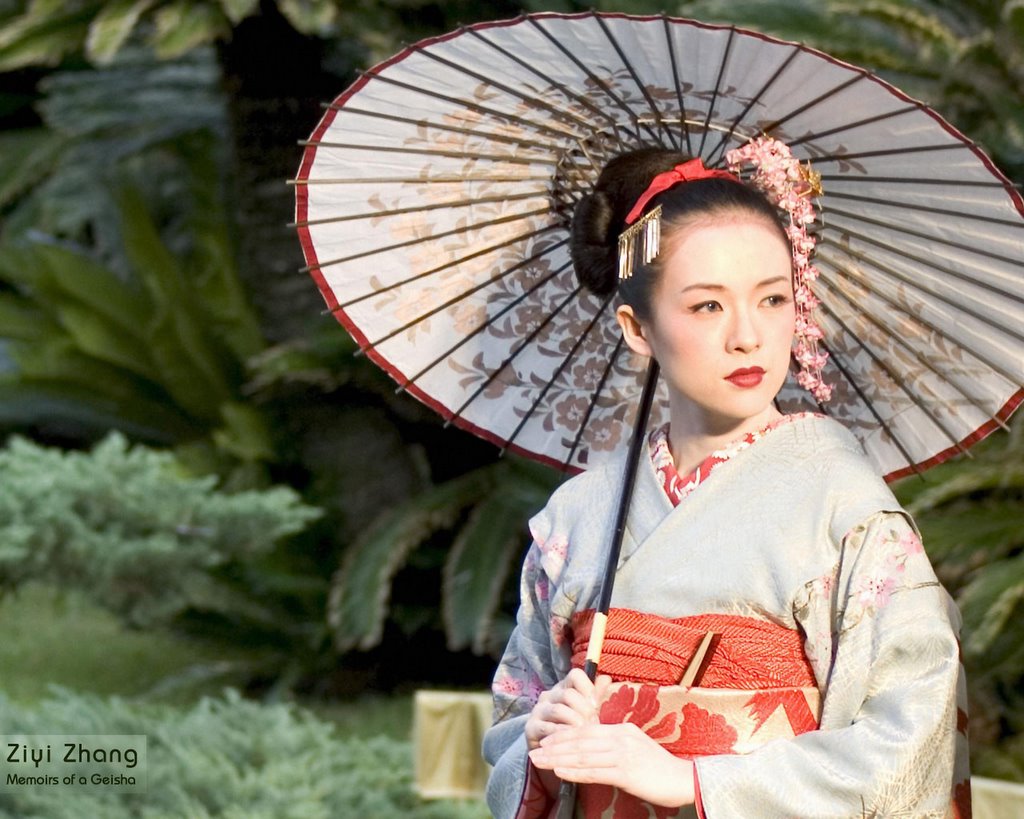
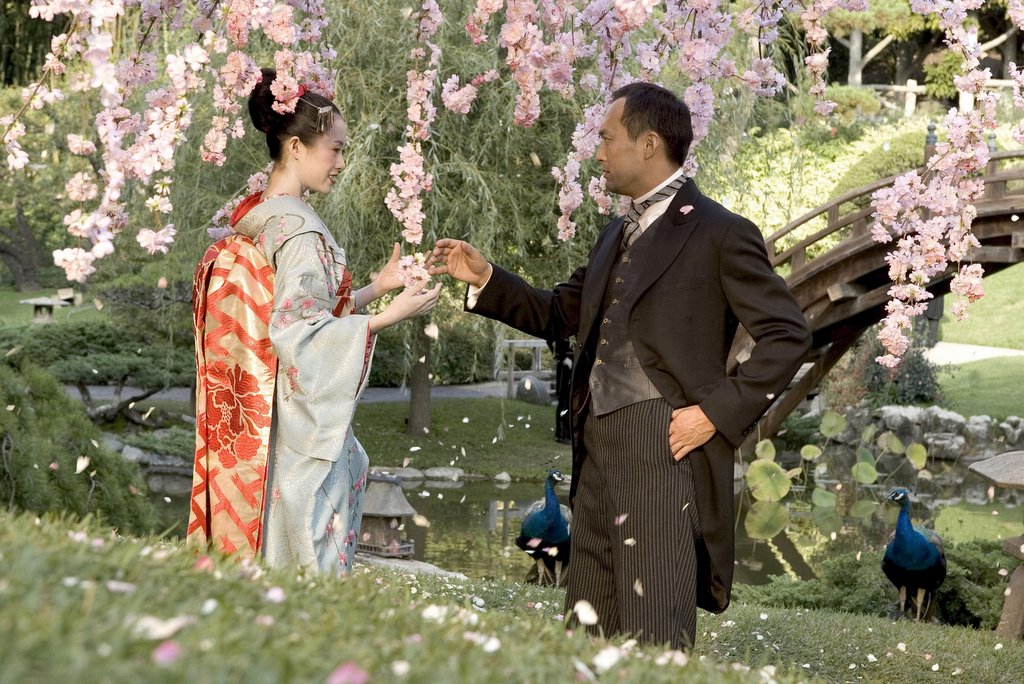
Before I start talking about the problems I have with this movie, I should first say that it was visually stunning and almost certainly entertaining. If you have wanted to see this movie, you should by all means go. There are some really brilliant shots, the cinematography is enchanting and the lighting is beautiful. Zhang Ziyi, Gong Li are breath-taking, and Yuki Kudoh and Kaori Momoi are a pleasure to watch. Don't let these ramblings deter you in any way. But be prepared...The more you know about Japan, the less you will enjoy Hollywood's version of Memoirs of a Geisha.
When I heard that the now famous book by Arthur Golden was going to be made into a movie, I was ecstatic. My hopes quickly turned to fears when I heard that the main actresses would not be Japanese, and that it would be shot in English, which seemed to be the first stabs at any hope for authenticity. The previews for the movie, mysterious and captivating as they were, boasted more than enough cultural inaccuracies to almost force me to swear not to see it. As time went by, hype continued to build, and my curiosity grew. I found myself eager to catch a glimpse of the girls of Gion through Hollywood's eyes.
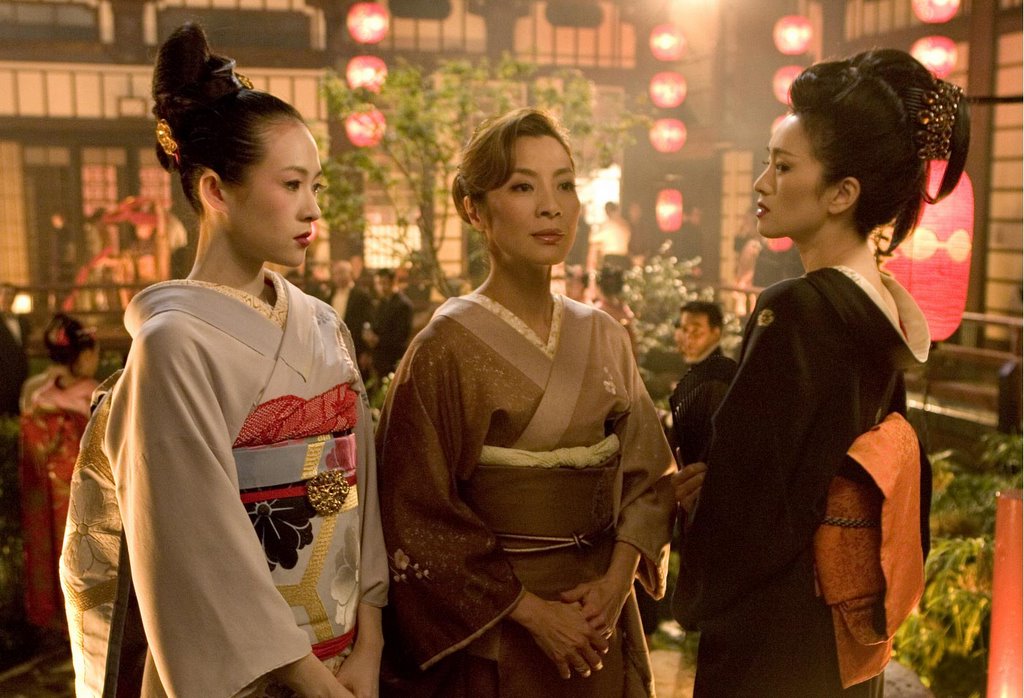
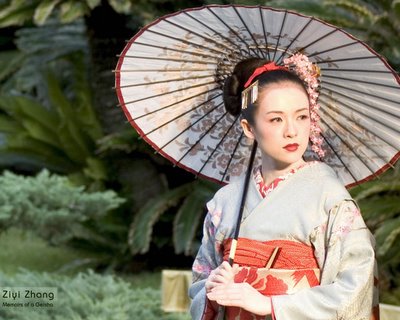 The debate over the casting of three Chinese (ethnically) actresses in traditionally Japanese roles have been raging since the movie's inception. I think this argument is bunk, since Zhang Ziyi has been cast as a Japanese princess in a Japanese production of "Princess Raccoon (Operetta Tanuki Goten)," far, far away from the evil reach of Hollywood (although very few people outside of Japan would know that). Though their cultures are significantly different from one another, they are actors, acting. After seeing the movie, I can say without a doubt that Zhang Ziyi, Michelle Yeow and Gong Li do just as well depicting geisha as Yuki Kudoh and Kaori Momoi (Japanese actresses in the roles of Pumpkin and Okaasan).
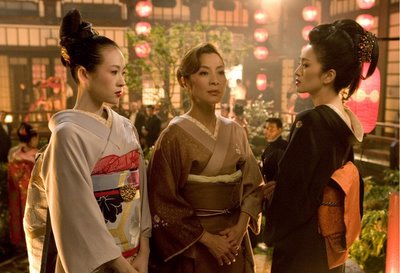 The weakness of the screenplay definitely required this holy triad of Asian cinema to carry it. Zhang, Li and Yeoh are skillful enough to bring their characters, as well as this secret, fantasy world to life.
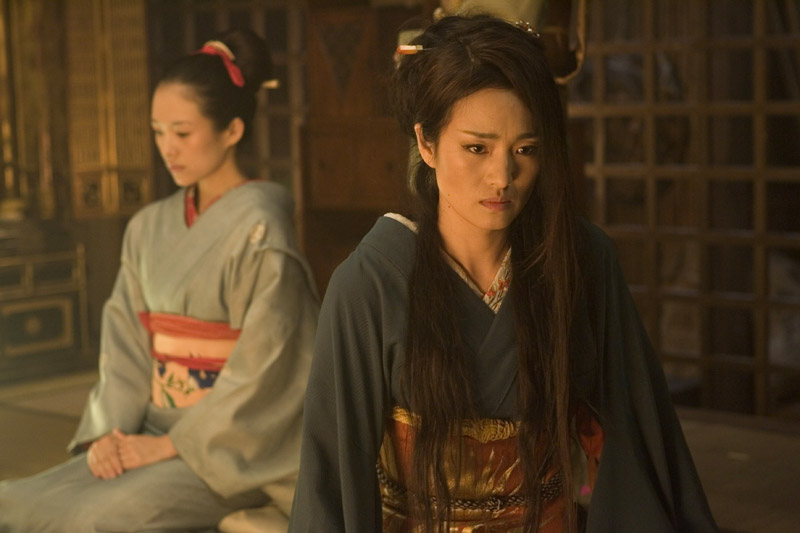
Knowing anything about Kyoto or geisha culture, however, will not help you enjoy this film. It is riddled with cultural inaccuracies. For example, the hair. No respectable geisha would ever be seen walking around Gion with her hair down, as Hatsumomo and Mameha do, let alone perform in that manner, as Sayuri does in her debut. When their hair is up, it is not in the style of the geisha, who wear wigs, or maiko, who wear it in a very different fashion. When they show the girls putting on their make-up, they have their hair pulled back and secured with a net and band, which is used beneath their wigs, which they never wear!

While the promotional photos of Sayuri's debut dance are stunning, the scene itself is a complete departure from the flower and willow world, even the one Marshall has tried to create. It’s modern, chaotic, and experimental: In short it’s everything that geisha are not. What makes it even worse is the preceding scene of Sayuri dancing in a traditional teahouse, similar to the way geisha actually perform. Then there are the scenes of her training, which imitate the traditional style. Even people with absolutely no knowledge of geisha are bound to be confused by the Spring Dance debut after seeing these scenes, just as I was. I think very few people will be able to appreciate whatever Rob Marshall was trying to do there.
The movie skips over many important parts of the story, especially in the beginning. It opens with Tanaka convincing Sayuri's father to sell his daughters, and then them being ripped away from their home. There is no mention of young Chiyo's first encounter with Tanaka, or her subsequent feelings for him, which sheds light on her future attraction to the Chairman. It also ignores the scene in which Chiyo sees Mr. Tanaka captivated and entertained by a country geisha, which I think would have been an interesting addition if only in passing.
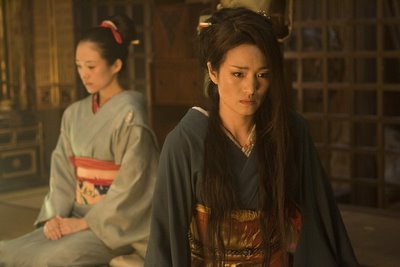 While Hatsumomo was unmistakably evil, I think some of the added scenes in this version took away from the impeccable character of Mameha. For example, after Sayuri is undressed by the Baron (Zhang deserves an award for this scene alone), a new scene was added between her and Mameha, who understood the baron's intentions for inviting her in the first place. Mameha is angry, and obviously jealous of Sayuri, assuming the baron has had his way with her. She chastises Sayuri for ruining all their plans, saying that if she has lost her virginity before her mizuage she is "Worthless". Whether or not the men bidding on Sayuri's mizuage would have agreed, I found this extremely contradictory, since this insult was hurled from the mouth another geisha-- the same geisha that tells Sayuri that "we are not courtesans...we sell our art, not our bodies...we are judged as living works of art."
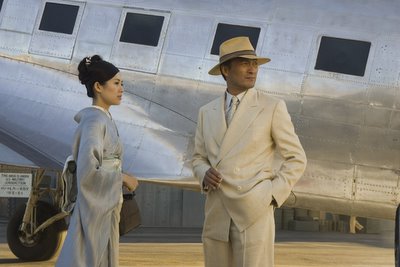 Perhaps the most disturbing departure from the story is near the end, when Sayuri accompanies the chairman, Nobu, and their associate to Okinawa. In Hollywood's version, this important business client is an American serviceman who has seen a picture of Sayuri and wants to meet her. Nobu agrees to arrange this meeting, and when Sayuri is introduced to him at the airfield, she greets him with "hajimemashite" (nice to meet you in Japanese) before engaging him in witty conversation- completely in English! Since almost the entire film is in English, you may think it’s not important. As long as the characters were in the "hanamachi" surrounded by other "Japanese", it is somewhat possible to suspend belief and imagine that they are communicating in their own language. But when a foreigner shows up, and then we are expected to believe that a geisha, with no exposure to the world outside of Japan, is suddenly able to entertain him with her witty conversation, that's stretching it. As if this unnecessary inclusion of foreigners wasn't enough, he later propositions her, offering to pay her for some "alone time", which she flat out refuses but later decides to suffer though in hopes of freeing herself from Nobu's affections.
 Why was it necessary to use a foreigner to play this role? In the book, it is a Japanese man's interest in Sayuri which Nobu hopes will save his business. It is that same man that propositions Sayuri, and who she later seduces. Changing this character into a foreigner who would presumably only see her as a high class prostitute is stereotypically cliché, especially since it was actually a Japanese man in the book. It would have been much less cliché and more and interesting to stick to the story and show the misunderstanding of geisha that permeates their own culture.
 Another completely unrealistic scene occurs after Sayuri returns home from her mizuage to find Hatsumomo in her room. The two engage in the inevitable kimono clad cat fight, knocking over a lamp and starting a fire. Sayuri sees the flames and attempts to extinguish it, while Hatsumomo wiggs out and begins throwing lamps, spreading the fire throughout the wooden okiya. The scene blurs out in a glow of flames obscuring her wicked eyes, and transitions to her disappearing into the foggy (or smokey) streets of the hanamachi, never to be seen again. Sayuri watches her from the second floor of the okiya! How did they survive? How did the Okiya, or the rest of the Hanamachi for that matter? There would have been no way to save the okiya and all its priceless heirlooms from the fire. Yet they continue on, without the loss of a single kimono, as if nothing ever happened.
Why didn't they choose to show the scene of Hatsumomo going mad with jealousy over the famous kabuki actor at the party? It definitely would have been more interesting and more believable!
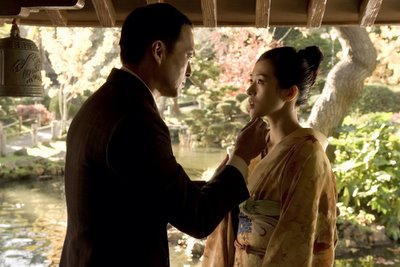 Overall, the mediocre quality of this movie is due largely to the embarrassing screenplay. The strong performance of the actors give the streamlined script a subtlety and emotion that can be truly moving (the final scene is absolutely beautiful), but it could have been so much better...

 Could they be any cooler? Maybe... If they were Shinigami! (^_<)






 Overall, the mediocre quality of this movie is due largely to the embarrassing screenplay. The strong performance of the actors give the streamlined script a subtlety and emotion that can be truly moving (the final scene is absolutely beautiful), but it could have been so much better...